
Email marketing remains a cornerstone of digital communication for businesses of all sizes. It offers a direct line to your audience, fostering relationships, driving sales, and building brand loyalty. However, the cost of sophisticated email marketing platforms can be a significant barrier, especially for startups, small businesses, or individuals just beginning their online journey. Fortunately, a robust ecosystem of free email marketing platforms exists, offering powerful features without the hefty price tag. These platforms democratize access to essential marketing tools, enabling anyone to craft and send professional email campaigns, manage subscriber lists, and analyze performance.
The value proposition of free email marketing platforms is clear: they provide a vital entry point into digital marketing. For many, they are the first step in building an email list, engaging with potential customers, and understanding the fundamentals of email campaign management. From solopreneurs to small teams, these platforms offer a practical solution to connect with audiences, share updates, promote products or services, and ultimately, grow a business. The key lies in understanding their limitations and leveraging their strengths to achieve your specific marketing objectives.
Key Takeaways
- Cost-Effective Entry: Free email marketing platforms provide a zero-cost way to start building an email list and sending campaigns.
- Essential Features Included: Most free plans offer core functionalities like list management, email builders, basic automation, and analytics.
- Scalability Considerations: Free plans have limitations on subscribers, sends, and advanced features, necessitating an upgrade as your list or needs grow.
- Platform Suitability Varies: The “best” free platform depends on your specific needs, such as list size, desired features, and ease of use.
- Data Privacy is Crucial: Always review the platform’s data handling policies, especially regarding your subscribers’ information.
- Focus on Content: Even with free tools, high-quality content and a well-defined strategy are paramount for successful email marketing.

Credit: flexisourceit.com.au
Understanding The Landscape Of Free Email Marketing Platforms
The world of email marketing software is vast, and while many platforms offer premium services, a significant number also provide generous free tiers. These free plans are designed to attract new users, allowing them to experience the platform’s capabilities firsthand.
They typically come with certain restrictions, such as a limit on the number of subscribers you can have, the number of emails you can send per month, or access to advanced features like A/B testing, sophisticated automation, or dedicated support.
Nevertheless, for many businesses and individuals, these limitations are manageable, especially in the initial stages of growth.
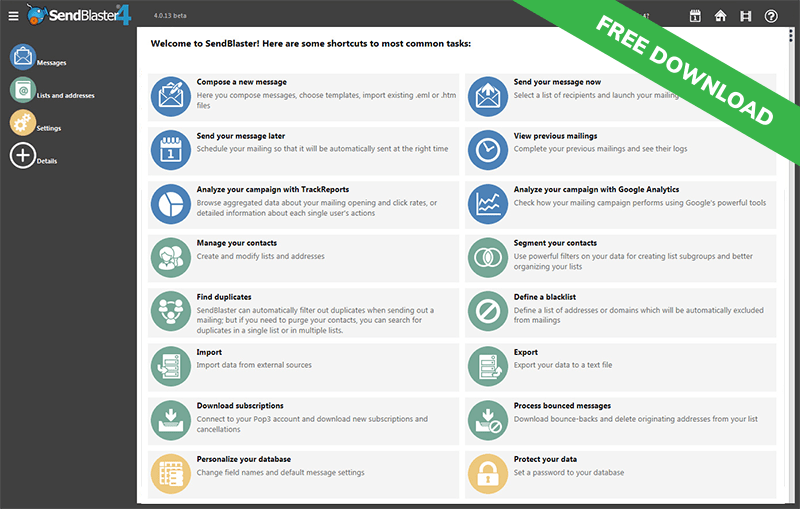
When evaluating free platforms, it’s crucial to look beyond just the “free” label. Consider the user interface (UI) and user experience (UX). Is the platform intuitive and easy to navigate? Can you quickly build an email without a steep learning curve? Equally important are the available features. Do they offer a drag-and-drop email editor? Can you segment your audience? Are there basic automation options available? Understanding these aspects will help you choose a platform that not only saves you money but also empowers you to create effective email campaigns. For instance, a platform that offers a visually appealing email builder can significantly reduce the time spent on campaign creation.
Credit: www.sendblaster.com
Top Free Email Marketing Platforms To Consider
Choosing the right free email marketing platform depends heavily on your specific needs and business goals. Some platforms excel in ease of use, making them ideal for beginners, while others offer more advanced features within their free tier, catering to those who need a bit more power from the outset.
Here, we explore some of the leading contenders, highlighting their strengths and limitations.
Mailchimp
Mailchimp is perhaps the most well-known name in email marketing, and for good reason. Its free plan is a popular choice for many small businesses and individuals due to its user-friendly interface and a decent set of features. It offers a drag-and-drop email builder, basic automation, audience segmentation, and landing pages.
Key Features of Mailchimp’s Free Plan:
- Subscribers: Up to 500 contacts.
- Monthly Sends: Up to 1,000 emails.
- Email Builder: Drag-and-drop editor.
- Automation: Basic pre-built journeys.
- Landing Pages: Yes.
- Reporting: Basic campaign reports.
Mailchimp’s strength lies in its simplicity and extensive resources. They offer a wealth of guides and tutorials, making it easy for beginners to get started. However, the limitations on contacts and sends can be quickly outgrown. Once you exceed 500 contacts, you’ll need to upgrade.
Sendinblue (now Brevo)
Brevo, formerly Sendinblue, offers a compelling free plan that is often considered more generous than Mailchimp’s in terms of monthly email sends. This makes it a strong contender for businesses that anticipate sending more frequent emails to a smaller list.
Brevo also includes features that are often reserved for paid plans on other platforms, such as SMS marketing and a CRM.
Key Features of Brevo’s Free Plan:
- Subscribers: Unlimited contacts.
- Daily Sends: Up to 300 emails per day.
- Email Builder: Drag-and-drop editor.
- Automation: Basic workflow automation.
- CRM: Basic CRM functionalities.
- SMS Marketing: Limited capabilities.
The unlimited contact list is a significant advantage, allowing your list to grow without immediate cost implications. The daily send limit, however, means you need to plan your campaigns strategically. Brevo’s integrated CRM is also a valuable asset for managing customer relationships directly within the platform.
Mailerlite
MailerLite positions itself as a user-friendly and affordable option, and its free plan reflects this philosophy. It provides a clean interface, a good selection of templates, and robust features for its free tier, often including more advanced options than competitors.
Key Features of MailerLite’s Free Plan:
- Subscribers: Up to 1,000 subscribers.
- Monthly Sends: Up to 12,000 emails.
- Email Builder: Drag-and-drop editor and rich text editor.
- Automation: Basic automation (e.g., welcome emails).
- Landing Pages: Yes.
- Forms: Embedded and pop-up forms.
- Surveys: Yes.
MailerLite’s free plan is notable for its generous subscriber and send limits, making it suitable for growing businesses. The inclusion of landing pages and surveys adds significant value, allowing for more comprehensive campaign strategies without immediate cost. Its focus on simplicity ensures a smooth user experience.
Constant Contact
While Constant Contact is primarily known for its paid plans, it sometimes offers extended free trials or specific limited-time free access programs. However, it’s important to note that a permanently free, feature-rich plan like those from Mailchimp or Brevo is not typically its standard offering.
If you find a free trial or a limited free program, it’s a great way to test its robust features, which include event marketing and social media tools. For ongoing free use, other platforms are generally more suitable.
Zoho Campaigns
Zoho offers a suite of business applications, and Zoho Campaigns is their email marketing solution. Its free plan is quite competitive, especially for users already within the Zoho ecosystem. It provides a solid set of features for managing contacts and sending campaigns.
Key Features of Zoho Campaigns’ Free Plan:
- Subscribers: Up to 2,000 contacts.
- Monthly Sends: Up to 6,000 emails.
- Email Builder: Drag-and-drop editor.
- Automation: Basic automation workflows.
- Templates: Pre-designed templates.
- Reporting: Standard campaign reports.
Zoho Campaigns’ free tier offers a good balance of subscriber and send limits, along with essential features. Its integration with other Zoho products can be a significant advantage for businesses already using Zoho CRM or other Zoho tools, creating a seamless workflow.
Aweber
AWeber is another established player in the email marketing space. Its free plan is designed for individuals and small businesses getting started. It offers unlimited emails, which is a strong selling point, but with a cap on subscribers.
Key Features of AWeber’s Free Plan:
- Subscribers: Up to 500 subscribers.
- Monthly Sends: Unlimited emails.
- Email Builder: Drag-and-drop editor.
- Templates: Access to a library of templates.
- Landing Pages: Basic landing page builder.
- Support: Email support.
The unlimited email sends are a major draw for AWeber’s free plan. This means you can send as many emails as you need to your 500 subscribers without worrying about exceeding a send limit. This is particularly beneficial if you plan to send daily or multiple times a week.
Comparing Free Email Marketing Platforms
To help you make an informed decision, let’s compare some of the most popular free email marketing platforms across key criteria. This table focuses on the core aspects that most users consider when choosing a free plan.
| Platform | Free Tier Subscriber Limit | Free Tier Monthly Sends | Email Builder | Automation | Landing Pages | Key Differentiator |
|---|---|---|---|---|---|---|
| Mailchimp | 500 | 1,000 | Drag-and-Drop | Basic | Yes | User-friendly interface, extensive resources. |
| Brevo (Sendinblue) | Unlimited | 9,000 (300/day) | Drag-and-Drop | Basic | No (in free tier) | Unlimited contacts, SMS marketing, integrated CRM. |
| MailerLite | 1,000 | 12,000 | Drag-and-Drop | Basic | Yes | Generous limits, surveys, and landing pages. |
| Zoho Campaigns | 2,000 | 6,000 | Drag-and-Drop | Basic | No (in free tier) | Good limits, integration with Zoho suite. |
| AWeber | 500 | Unlimited | Drag-and-Drop | Basic | Yes | Unlimited sends to a limited list. |
This comparison highlights that there’s no single “best” free platform. If your priority is to have an unlimited contact list, Brevo is a strong contender. If you need to send many emails to a smaller list, AWeber’s unlimited sends might be appealing.
For a balance of features and good limits, MailerLite often stands out.

Credit: www.youtube.com
Essential Features To Look For In A Free Plan
When diving into the world of free email marketing platforms, it’s easy to get overwhelmed by the sheer number of options. However, focusing on a few key features will help you narrow down your choices and select a platform that truly benefits your business.
Even free plans should offer a solid foundation for building effective email campaigns.
Email Editor And Templates
A user-friendly email editor is non-negotiable. Look for a drag-and-drop interface that allows you to easily arrange text, images, and buttons without needing to know how to code. The availability of pre-designed templates is also a significant advantage. These templates provide a starting point for your emails, ensuring a professional look and saving you time. Ensure the templates are responsive, meaning they adapt well to different screen sizes (desktops, tablets, and smartphones). A good template library can elevate your brand’s visual identity.
List Management And Segmentation
Effective email marketing relies on sending the right message to the right people. Therefore, a free platform should offer basic list management capabilities. This includes the ability to import contacts, organize them into lists, and remove unsubscribes. Segmentation is the process of dividing your subscriber list into smaller groups based on specific criteria (e.g., demographics, purchase history, engagement level). Even basic segmentation options allow you to send more targeted and relevant emails, which can significantly improve open and click-through rates.
Automation Capabilities
While advanced automation is typically reserved for paid plans, many free platforms offer basic automation features. The most common is the welcome email, which is automatically sent to new subscribers. Other basic automations might include birthday emails or simple drip campaigns triggered by specific actions. These automated sequences can save you time and ensure consistent communication with your audience from the moment they subscribe.
Analytics And Reporting
To understand what’s working and what’s not, you need access to analytics. Free plans usually provide basic reporting on key metrics like open rates, click-through rates, unsubscribes, and bounces. While not as in-depth as paid plans, this data is essential for tracking the performance of your campaigns and making informed adjustments to your strategy. Look for platforms that present this data in a clear and understandable format.
Deliverability
Ultimately, your emails need to reach your subscribers’ inboxes. This is known as deliverability. While free platforms can sometimes have lower deliverability rates compared to paid services due to shared IP addresses or less stringent sender reputation management, reputable platforms work hard to maintain good deliverability. Researching user reviews and looking for platforms with established reputations can provide some assurance.
Best Practices For Using Free Email Marketing Platforms
Leveraging a free email marketing platform effectively requires more than just signing up and sending emails. To maximize your results and ensure you’re building a sustainable email list, adhere to these best practices.
Build Your List Organically And Ethically
Never purchase email lists. Focus on attracting subscribers who are genuinely interested in your content or offerings. Use opt-in forms on your website, social media, and other relevant channels. Clearly state what subscribers can expect to receive from you and how often.
Respecting user privacy and providing value upfront are crucial for building a loyal audience. For those looking to build an online presence, understanding how to start an online business strategy is a good first step.
Craft Compelling Content
Your emails are only as good as the content they contain. Focus on providing value to your subscribers. This could be through informative articles, exclusive offers, helpful tips, or engaging stories. Ensure your emails are well-written, free of errors, and visually appealing.
A clear call to action (CTA) should guide readers on what you want them to do next.
Segment Your Audience
As mentioned earlier, segmentation is key. Even with basic segmentation tools available in free plans, try to group your subscribers based on their interests or behaviors. Sending targeted emails leads to higher engagement. For example, if you run an e-commerce store, segmenting customers based on past purchases can lead to highly relevant product recommendations. This is a core principle in many ecommerce marketing strategies.
Personalize Your Emails
Beyond segmentation, personalization involves using subscriber data to make emails feel more individual. This can be as simple as using the subscriber’s name in the greeting. More advanced personalization might involve recommending products based on their browsing history or past purchases.
Even basic personalization can significantly boost engagement.
Test And Analyze Your Campaigns
Use the analytics provided by your free platform to understand what resonates with your audience. Monitor open rates, click-through rates, and conversions. Experiment with different subject lines, content formats, and send times to see what performs best. This continuous testing and analysis are vital for optimizing your email marketing efforts.
Maintain List Hygiene
Regularly clean your email list by removing inactive subscribers or invalid email addresses. This practice improves your sender reputation and can lead to better deliverability. Most platforms flag inactive subscribers, making it easier to identify them.
Understand The Limitations And Plan For Growth
Free plans are a starting point, not an endpoint. Be aware of the limitations on subscribers, sends, and features. As your business grows and your email list expands, you will likely need to upgrade to a paid plan. Planning for this transition ensures you can continue to scale your email marketing efforts without interruption. For businesses focusing on specific niches, like authors, understanding the best email marketing platform for authors can be crucial for boosting sales.
Real-world Examples And Use Cases
Free email marketing platforms are not just for hypothetical scenarios; they power real businesses and individuals every day. Here are a few examples of how different entities leverage these tools:
Example 1: The Local Bakery
“Sweet Treats Bakery,” a small, family-owned bakery, uses MailerLite’s free plan. They collect email addresses from customers who sign up in-store or via a website pop-up offering a discount on their next purchase. They send out a weekly newsletter featuring their “special of the week,” upcoming seasonal items, and behind-the-scenes glimpses of their baking process.
With under 1,000 subscribers and sending emails twice a week, MailerLite’s free tier is perfect. This allows them to announce new products, promote limited-time offers, and build a loyal local customer base.
Example 2: The Freelance Graphic Designer
A freelance graphic designer uses Brevo’s free plan to manage their client communications and nurture potential leads. They have a simple website with a contact form and a link to subscribe to their “Design Tips Newsletter. ” They send out monthly newsletters with industry insights, tips for businesses looking for design services, and a showcase of their recent projects.
Brevo’s unlimited contact list is ideal because their lead generation can be unpredictable. The basic CRM helps them track inquiries, and the email campaigns keep their brand top-of-mind for potential clients.
Example 3: The Hobby Blogger
A blogger who writes about sustainable living uses AWeber’s free plan. They have around 400 active subscribers who signed up through a simple form on their blog. They send out a bi-weekly newsletter with links to their latest blog posts, curated articles on sustainability, and occasional product recommendations (affiliate links).
AWeber’s unlimited sends are perfect for this blogger, as they can send multiple emails a week if needed without worrying about exceeding a limit, ensuring their audience stays engaged with fresh content.
These examples illustrate how different types of users can effectively utilize the free tiers of email marketing platforms to achieve their specific communication and business goals, from local sales to lead generation and content promotion.
When To Consider Upgrading From A Free Plan
While free email marketing platforms are incredibly valuable, there comes a point when their limitations start to hinder your growth or operational efficiency. Recognizing these signs is crucial for making a timely transition to a paid plan.
One of the most common triggers for upgrading is exceeding subscriber limits. Most free plans cap the number of contacts you can manage. If your list is growing rapidly, you’ll eventually hit this ceiling, preventing you from adding new subscribers. Continuing to collect emails beyond the limit means you might be losing potential customers or valuable leads.
Another significant indicator is the monthly send limit. If you find yourself needing to send more emails than your free plan allows, you’ll have to pause campaigns or wait for the next month’s allowance. This can disrupt your marketing cadence and reduce your ability to engage with your audience consistently. For businesses that rely on frequent communication, such as e-commerce stores running daily promotions, this limitation becomes a major bottleneck.
Lack of advanced features is another reason to consider upgrading. As your marketing strategy matures, you might require more sophisticated tools. This could include:
- Advanced Automation: Building complex customer journeys, triggered emails based on specific user behaviors (e.g., cart abandonment), or personalized onboarding sequences.
- A/B Testing: Experimenting with different subject lines, content, or CTAs to optimize campaign performance.
- Sophisticated Segmentation: Creating highly specific audience segments based on a wider range of data points.
- Dedicated IP Addresses: For very large lists, a dedicated IP can improve deliverability and sender reputation.
- Enhanced Analytics: Deeper insights into subscriber behavior, conversion tracking, and ROI.
- Priority Support: Access to faster and more comprehensive customer support when issues arise.
If you find yourself consistently needing these capabilities to achieve your marketing goals, it’s a clear sign that a paid plan would offer a better return on investment. The cost of a paid plan often becomes justifiable when you consider the potential increase in sales, customer retention, and efficiency that these advanced features can provide.
Frequently Asked Questions
What Is The Main Difference Between Free And Paid Email Marketing Platforms?
The primary differences lie in the limits and features. Free plans typically restrict the number of subscribers, monthly email sends, and access to advanced functionalities like sophisticated automation, A/B testing, advanced analytics, and dedicated support. Paid plans remove these limits and unlock a wider array of tools designed for scalability and deeper campaign optimization.
Can I Use A Free Email Marketing Platform For A Commercial Business?
Yes, absolutely. Most free email marketing platforms allow commercial use, provided you adhere to their terms of service, including anti-spam policies and data privacy regulations. They are designed to help small businesses and startups get started without upfront costs. However, always check the specific terms of the platform you choose.
How Do Free Platforms Make Money If They Offer Services For Free?
Platforms offering free tiers typically make money in a few ways. Firstly, they aim
