
Dropshipping jewelry suppliers are companies that hold the stock, pack the order, and ship it to your customer with your store’s name on the parcel — you never touch the item. You pay the supplier’s wholesale price, add your margin, and keep the difference. Most jewelry suppliers charge a modest amount per piece for fashion items and somewhat more for sterling silver, with shipping on top.
Two things decide whether this works: the supplier’s real shipping time, and whether their photos match what arrives.
Ask for the dispatch time in writing, not the delivery estimate on their homepage. A supplier who ships in 24 hours and a supplier who ships in 7 days look identical on a product page, and the second one will cost you the customer.
Then order three pieces to your own address. If the plating is thinner than the photo, or the clasp is a different style, that’s what every buyer will receive, and refunds will eat the margin you calculated.
If you can’t get a straight answer on dispatch time, or the samples disappoint, move on. There are enough suppliers that no single one is worth the risk.
The rest of this guide covers how to test a supplier, the settings that matter, and when jewelry dropshipping is the wrong model for you.
What a jewelry dropshipping supplier really does
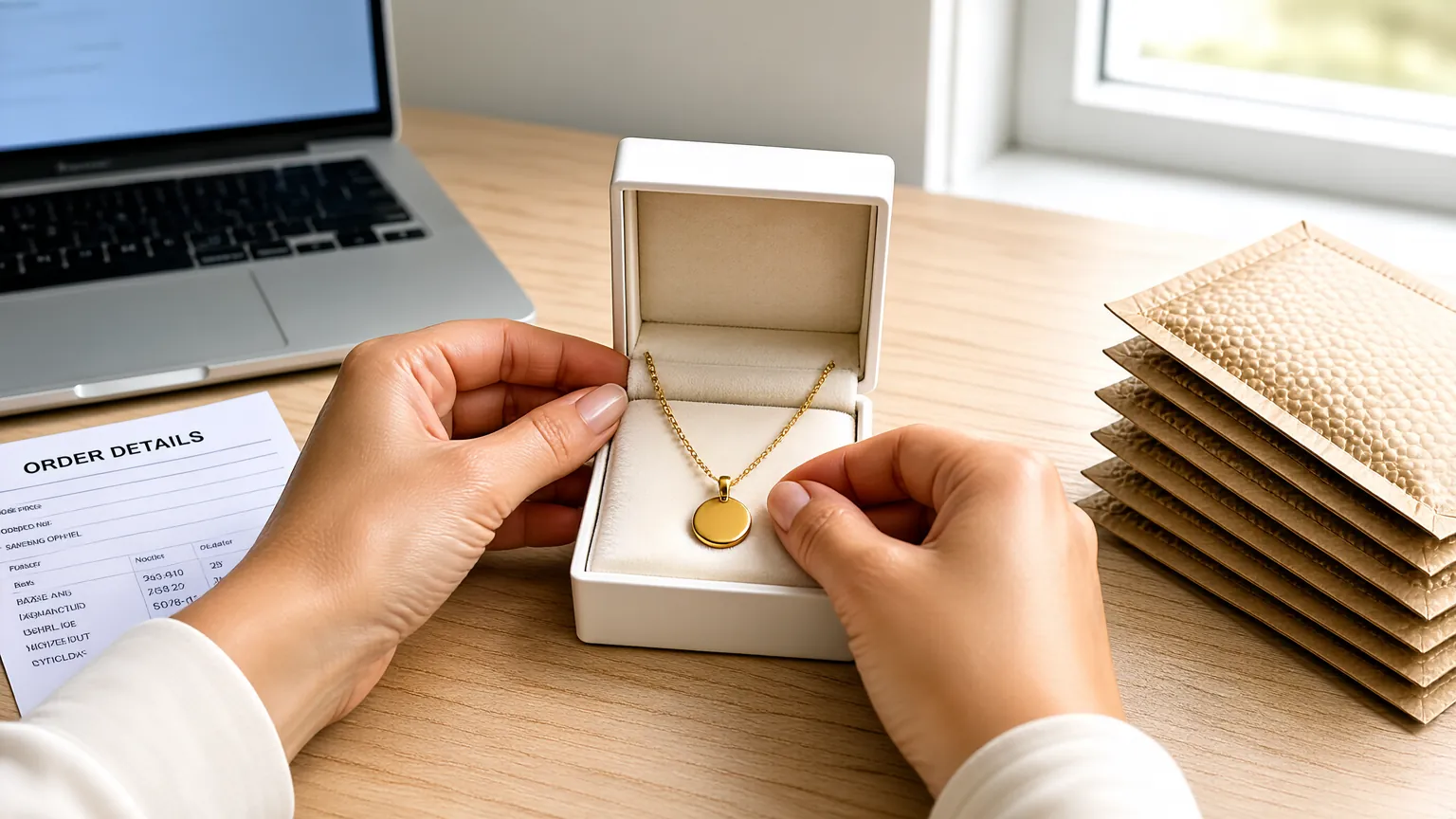
A jewelry dropshipping supplier is a wholesale business that agrees to ship single items to your customers instead of bulk orders to you. You list their products in your store, often with their photos and descriptions. When someone buys, you forward the order and the address to the supplier, pay their wholesale price, and they send the parcel out. Your profit is the gap between your retail price and that wholesale price, minus fees.
It’s used by people who want to sell jewelry without buying inventory upfront. That includes new store owners testing a niche, and existing stores adding rings, necklaces or earrings to a product line they already run.
The misconception people bring here is that a supplier is also a business partner. Most are not. They sell the same catalog to hundreds of stores, so your product pages will look like someone else’s unless you write your own copy and shoot your own photos. The relationship is a transaction, not a partnership.
One rule matters more than the rest: the supplier ships on your behalf, so under marketplace rules the customer’s contract is usually with you, not them. If the parcel goes missing, you refund. That’s why the checks below exist.
How to test and set up a supplier
- Shortlist 3 to 5 suppliers in one week. Look for a real business address, a phone number, and a catalog with at least 200 items. Skip anyone who only answers through a chat box and won’t name a company.
- Order 2 to 3 samples to your own address. Pay retail, not wholesale, so you see what a customer sees. Allow 10 to 20 days for delivery if they ship from Asia, 3 to 7 days if they ship domestically.
- Time the dispatch, not just the delivery. Ask how many business days pass between receiving an order and handing it to the carrier. Anything over 3 business days will hurt you on Amazon and eBay.
- Check the material claim against the price. A “sterling silver” ring at a very low price isn’t sterling silver. Ask for the millesimal stamp — 925 for sterling, 999 for fine silver — and a photo of it.
- Confirm who handles returns. Get it in writing: the return window, who pays return postage, and whether they restock or refund you. A 30-day window is common; 7 days is too tight for most buyers.
- Set your shipping policy in the store before you list anything. State the processing time, the delivery estimate, and the country of dispatch. Buyers forgive slow shipping. They don’t forgive being surprised.
- Run 10 to 15 orders before you scale. Track how many arrive on time, how many have a defect, and how many customers complain. Below 90% on-time, fix the supplier or drop them.
- Add a second supplier for your best sellers. One supplier going out of stock on your top ring costs you the listing’s ranking, which takes weeks to rebuild.
The judgement call is price versus control. The cheapest supplier usually has the slowest dispatch and the vaguest material claims. Paying 20-30% more for a supplier who dispatches in 24 hours and answers email within a day is almost always worth it, because your reviews are the asset you’re actually building.
If you plan to sell in the US and make claims about metal content, labeling falls under FTC rules, and mislabeling precious metal is a legal problem, not a customer service one. For anything beyond basic fashion jewelry, work with a supplier who will put the claim in writing, or talk to a trade lawyer.
Jewelry supplier numbers at a glance
These are the ranges you’ll see most often. Treat them as starting points, not promises — confirm every figure with the supplier you actually choose, in writing, before you list the product.
| Situation | What to use | How long | What to watch for |
|---|---|---|---|
| Fashion jewelry, testing a new store | Supplier shipping from Asia, $2-$8 per piece | 10-20 days to the US | Slow dispatch kills your first reviews |
| Sterling silver, US buyers | Domestic supplier, $15-$40 per piece | 3-7 days | Ask for the 925 stamp photo |
| Gold-plated items | Plated supplier, $5-$15 per piece | 7-14 days | Plating wears off; state the thickness |
| Stainless steel | Steel supplier, $4-$12 per piece | 7-14 days | Hypoallergenic claim needs a nickel test |
| Custom or engraved pieces | Made-to-order supplier | 5-10 days production, then shipping | No returns on personalized items |
| High-ticket fine jewelry | Wholesaler with insured shipping | 2-5 days | Require signature on delivery |
| Bulk restock for a proven seller | Direct wholesale, not dropship | 2-4 weeks | Customs and duty land on you |
What good suppliers do differently
Experienced sellers pick a supplier the way they’d pick a landlord: they check the boring things first. They read the supplier’s own terms page before ordering, not after. They look for a stated processing time, a stated return address, and a named carrier. A supplier who won’t publish those details is telling you something.
They also order samples in a batch, not one at a time. Three items from the same supplier tell you whether the quality is consistent or whether you got lucky with one good piece. Consistency is the whole game, because your customer only ever sees one item.
The order they work in
Good sellers build the product page before they build the ad. They write the description themselves, using the supplier’s specs but their own words. They photograph the item if they can, or use supplier images only where the license allows it. Then they set the shipping profile to match the supplier’s real timeline, with a buffer of 2 to 3 days.
Only after that do they spend on traffic. Running ads to a page with a wrong shipping estimate means paying for clicks that turn into refund requests.
What they leave alone
They don’t list 500 products at once. They list 10 to 20, watch which ones sell, and go deeper on those. They also don’t chase the absolute lowest price. A store that competes only on price has no room to absorb a return, and returns are guaranteed in jewelry — sizing, plating, and personal taste all cause them.
Common problems and what to do first
| What you notice | What it usually means | What to do first |
|—|—|—|—|
| Customer says the item looks nothing like the photo | Supplier used stock images that don’t match the batch | Order a sample from the current batch and reshoot |
| Orders stuck “processing” for days | Supplier dispatches slower than advertised | Ask for the dispatch date, then set a longer handling time |
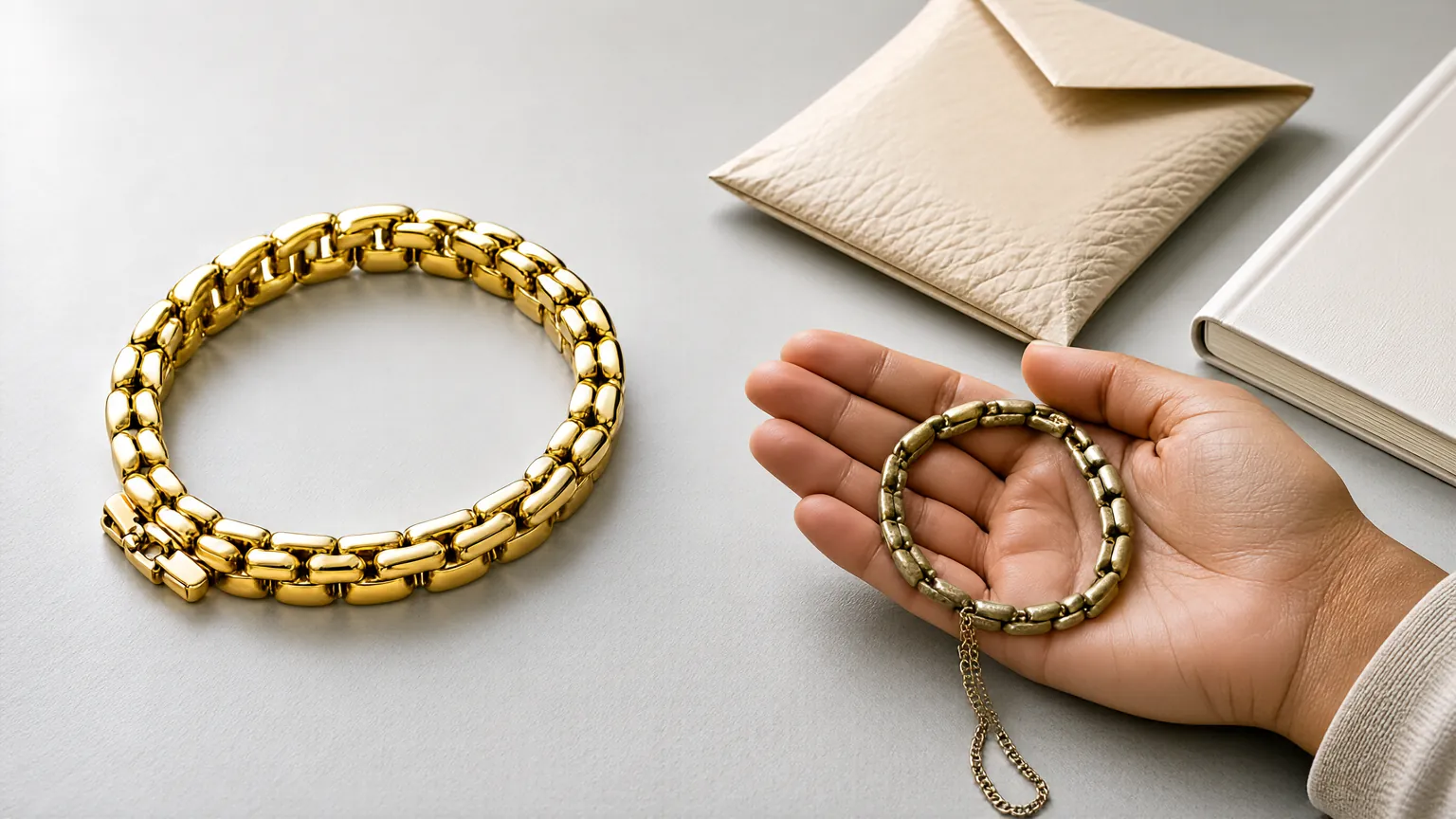
| Skin turning green under a ring | Copper base with thin plating | Switch to stainless steel or 925 silver for that listing |
| Package arrives damaged | Jewelry shipped in an envelope, not a box | Ask the supplier to box items, or pay for it |
| Returns piling up on one product | Sizing chart is wrong or missing | Add a real measurement chart in mm |
| Tracking never updates | Supplier used an untracked economy service | Upgrade to tracked shipping on that route |
Two of these look alike and are not. Green skin and a rash are different problems. Green skin is harmless copper salts and a plating issue. A rash, itching or blistering within a day of wearing points to nickel, and the fix is a different one: stop selling that supplier’s base metal entirely, not just that listing.
Damage is the other one people misread. One crushed box in twenty is a packing problem. Three in twenty from the same route means the carrier is the problem, and boxing alone won’t save it.
Before you change anything, count. Pull your last fifty orders for the product and tally how many hit each row. A problem you can put a number on is a problem you can argue about with a supplier. “Several customers complained” gets you nothing. “Six of fifty arrived bent” gets a credit or a new packing method.
Fix the row with the highest count first. Most sellers try to fix all six at once, change everything, and learn nothing about which change worked.
The rules that apply to jewelry sellers
Labeling and metal claims in the US sit with the Federal Trade Commission. Its Jewelry Guides set out when you can call something “gold,” “silver,” or “gold-plated,” and how much of the base metal has to be covered. If a supplier’s listing says “gold” and the item is gold-plated, that claim becomes yours the moment you publish it. The FTC publishes these guides on its own site, and they’re worth reading before you write a single product description.
Consumer protection rules also apply to you, not your supplier. In the US, the FTC’s Mail, Internet, or Telephone Order Merchandise Rule requires sellers to ship within the time stated, or within 30 days if no time is stated, and to offer a refund if they can’t. In the EU, buyers get a 14-day right of withdrawal on most online purchases under the Consumer Rights Directive. Check your own country’s consumer body for the exact rule that covers you.
Customs is the other limit. Importing jewelry into the US means duty, and the rate depends on the material and the country of origin — check the Harmonized Tariff Schedule entry for your specific item rather than assuming.
If you’re selling items with real gemstones or making health claims like “hypoallergenic,” get advice from a trade lawyer or your country’s consumer regulator. Those claims carry legal weight.
Keeping your supplier relationship working
Once orders are flowing, the job shifts from finding a supplier to keeping them. Pay on time, every time. Suppliers prioritize stores with clean payment history when stock runs low, and stock always runs low on the items that sell best.
Keep a simple record for each supplier: dispatch time, defect rate, and the date you last checked their catalog. Review it every 3 months. Suppliers change carriers and swap materials without telling you, and a supplier who was reliable in January can be a problem by June.
When a supplier misses a dispatch window twice in a row, or the defect rate climbs past what you can absorb, start qualifying a second source before you confront them. A backup you can name is what gives you room to negotiate. Without one, you take whatever terms they offer.
Re-order a sample whenever you notice a change in the product — a new color, a different clasp, a lighter weight. That’s the sign the batch changed. If a listing has been running well for a year, sample it again anyway.
Store your supplier contracts, return terms, and any written material claims in one folder. When a dispute happens, the email where they confirmed “925 sterling silver” is the only thing that settles it.
When dropshipping is the wrong choice

If your average order value is high, dropshipping usually costs you more than it saves. Buyers at that price expect fast, tracked, insured delivery and a real returns process. Stock the items yourself or use a fulfillment center instead.
If you’re selling one hero product and nothing else, holding your own inventory is cheaper per unit and gives you control over packaging. Dropshipping makes sense when you’re testing many products. It makes less sense when you’ve already found the one that works.
If you need custom engraving, made-to-order sizing, or certification papers, a dropshipper can’t deliver reliably. Go direct to a manufacturer, even at higher minimums.
And if you can’t absorb a refund without it hurting, don’t start. Returns are part of the model, not an exception to it.
The trap is running both at once without deciding. Sellers keep a supplier for their best seller and drop-ship the rest, then wonder why margins slide. Pick one model per product line and commit.
Watch your supplier’s processing time, not just their shipping time. A three-day handling delay turns a five-day promise into eight, and that gap is where your refund requests come from.
If you sell in a category where sizing drives returns, such as apparel or footwear, the return rate alone can wipe out the margin. Test with a small batch you hold yourself before you scale anything.
If a supplier won’t tell you their handling time in writing, treat that as your answer and look elsewhere.
Related guides
Frequently asked questions
How long does dropshipping jewelry take to arrive?
It depends on where the supplier ships from. From Asia to the US, expect 10 to 20 days. From a domestic US supplier, 3 to 7 days. Add 1 to 3 business days for processing. Always publish the upper end of the range in your store so late parcels don’t become refund requests.
Can I dropship jewelry without holding any stock?
Yes. That’s the whole point of the model — the supplier holds the stock and ships each order as it comes in. You only pay the wholesale price after a customer buys. The trade-off is that you can’t inspect the item before it reaches your customer, so sample checks matter more.
Is it safe to buy jewelry from a dropshipping supplier?
It’s safe if you check the material claims yourself. Ask for the metal stamp, order samples, and avoid suppliers who won’t name their materials. Nickel is a common allergen in cheap jewelry, so if you make hypoallergenic claims, get the supplier to confirm nickel content in writing.
Why do my jewelry orders keep arriving late?
Usually because the supplier’s real dispatch time is longer than the one advertised. Ask them for the average number of business days between order and carrier handoff, then add 2 to 3 days as a buffer. If they won’t give you a number, that’s your answer.
What happens if a customer wants a refund?
You pay it, then claim it back from the supplier under their return terms. That’s why you confirm the return window and who covers postage before listing. Most suppliers accept returns within 30 days if the item is unworn, but personalized items are usually final sale.
How much profit can I make on one piece?
On fashion jewelry, sellers often work with a 2x to 3x markup on the wholesale price, so a low-cost piece sells for several times that before fees and ads. On sterling silver, the margin is thinner in percentage terms because the base cost is higher. Your real profit depends on ad spend and return rate, so run the numbers per product.
Do I need a business license to sell jewelry online?
It depends on your country and state. In the US, most states require a sales tax permit, and some require a general business license. Check your state’s revenue department and your local city rules, since thresholds and names vary. This isn’t legal advice — confirm with your state agency.
Conclusion
The model works when you treat the supplier as a vendor you audit, not a partner you trust. Sample everything, publish honest timelines, and keep one backup supplier for your best seller. Do those three things and the rest is just steady work.
