
For most Shopify stores, the best fulfillment service is Shopify Fulfillment Network if you’re already selling in the US and want one company to handle storage, picking, packing and delivery. It plugs straight into your admin, so orders flow out without you touching a spreadsheet.
The one case where something else wins: if you sell heavy or bulky items, or you ship from outside the US, a regional 3PL near your customers usually beats it on both speed and shipping cost.
Weight is the dividing line more often than people expect. Once a single unit is bulky relative to its weight, dimensional weight starts driving the bill, and carriers charge for whichever is greater — the box the item fills or what it weighs. At that point a warehouse across the country is a liability, because every order pays to cross the map twice.
If you’re just starting and orders are small, doing it yourself for the first month is fine. You’ll learn what your real costs are before you sign anything.
Set a threshold before you switch. If you’re shipping fewer than about 50 orders a week, your own shelf and a printer are usually cheaper than any per-order pick fee. Past a few hundred a week, the math flips, because your time becomes the expensive line item.
The mistake that costs the most: signing an annual volume commitment to unlock a lower per-order rate, then missing it in a slow quarter. You lose the discount and get trued up to the higher rate on the volume you actually shipped.
Prices change often, so check each provider’s own pricing page for current rates.
Fulfillment options for Shopify stores compared
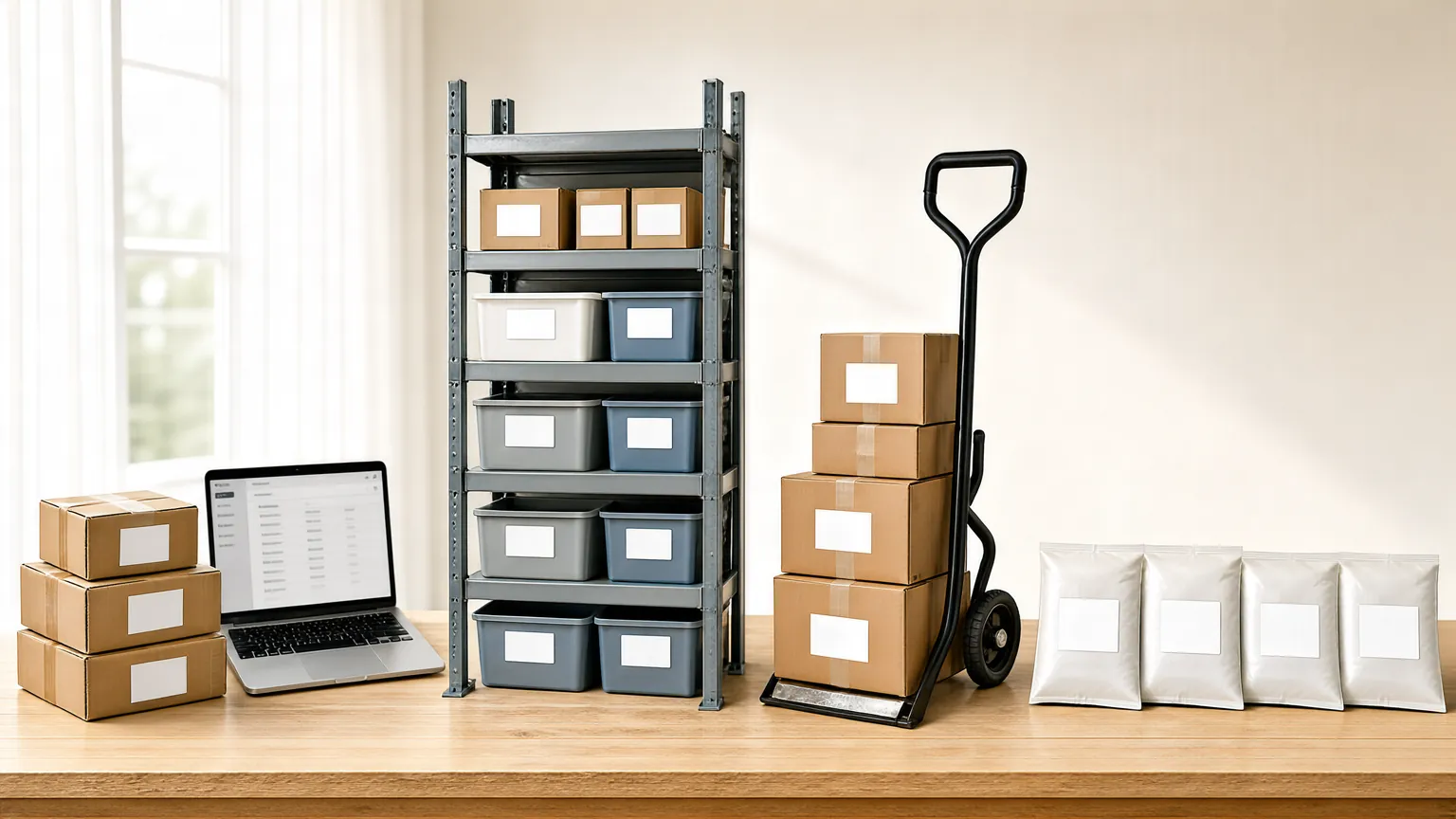
Here’s the honest picture. There’s no single winner — each method trades speed, control and money against the others. The table below puts four real options side by side.
| Method | How long to set up | Effort | Cost | Best for |
|---|---|---|---|---|
| Shopify Fulfillment Network | 1–2 weeks | Low | Medium | US sellers who want it built into Shopify |
| Third-party logistics (3PL) | 2–4 weeks | Medium | Medium | Stores with 50+ orders a month |
| Amazon Multi-Channel Fulfillment | 3–7 days | Low | High | Sellers already storing stock in Amazon |
| Self-fulfillment | Same day | High | Low | New stores under ~20 orders a month |
Shopify Fulfillment Network is Shopify’s own service. You send stock to their warehouses, and they store it, pick it, pack it and ship it. Because it’s part of Shopify, tracking numbers and inventory sync automatically. The catch is coverage — it works best for US-based sellers.
A third-party logistics company (3PL) is an independent warehouse. You pick one near your customers, send your stock, and they ship on your behalf. You get more choice and often better rates on bulky goods, but you manage the relationship yourself.
Amazon Multi-Channel Fulfillment (MCF) uses Amazon’s warehouses to ship orders from your own Shopify store, not just Amazon orders. It’s fast and reliable, but you pay Amazon’s rates and you’re tied to their rules.
Self-fulfillment means you pack every order at home or in your own space. It’s the cheapest way to start and the most work.
No row wins everything. Shopify Fulfillment Network is easiest to set up but limited by region. A 3PL gives flexibility but takes longer to onboard. Amazon MCF is quick but costly. Self-fulfillment is cheap but eats your time.
Using Shopify Fulfillment Network
This is the simplest path if you’re in the US and want fulfillment handled inside the tools you already use. Setup takes about 1–2 weeks, mostly waiting on your first stock to arrive at their warehouse.
- Check you’re eligible. Log into your Shopify admin, go to Settings, then Locations, and look for the fulfillment option. If your store isn’t in a supported region, you won’t see it — that’s your sign to look at a 3PL instead.
- Connect your products. Add each product’s weight and dimensions in the product page. Wrong measurements mean wrong shipping charges, so weigh a packed box, not just the item.
- Send your stock. Create a transfer in Shopify, print the labels, and ship your units to the assigned warehouse. Allow 3–7 days for processing once it lands.
- Set your shipping rules. Choose which rates customers see at checkout. Free shipping over a set amount is common, but run the numbers first — you’re paying the fulfillment fee either way.
- Test with one order. Place a real order yourself and watch it move through picking, packing and delivery. Fix any address or weight issues before you scale.
What it’s good at: it removes almost all manual work. Orders flow in, tracking flows out, and you never print a label. For a solo founder, that’s hours back every week.
The weakness is control. You can’t walk the warehouse floor or ask for a special pack. If something goes wrong, you’re in a support queue like everyone else.
Two limits decide whether that trade is worth it. The first is size: the network is built for small, light, uniform items, so if you sell furniture or anything over a few feet, the per-unit fee climbs past what a regional 3PL quotes you. The second is volume. Below roughly a hundred orders a month, the storage and pick fees usually cost more than the hours you save.
If you sell small items and ship steadily, go with it. If you sell bulky goods or you’re still under a hundred orders a month, price a 3PL first.
One mistake costs people money here: sending inventory in before the product pages have real weights and dimensions. The warehouse receives it, the listing goes live with guessed numbers, and every order ships at the wrong rate until you catch it. Fix the data before the boxes leave your house.
Working with a third-party logistics company

A 3PL is an independent warehouse that stores your stock and ships your orders. You’ll find them by searching for “3PL” plus your region, or by asking other Shopify sellers who they use. Onboarding usually takes 2–4 weeks.
- Shortlist three providers. Look for one within a day’s drive of most of your customers. Closer warehouses mean faster delivery and lower shipping costs.
- Ask for a written quote. Get the storage fee per pallet or bin, the pick-and-pack fee per order, and the receiving fee per shipment. Ask what happens when an order needs two boxes.
- Send a test shipment. Before committing, ship 10–20 units and place a few orders. Check packing quality and how fast they respond when you email.
- Connect it to Shopify. Most 3PLs have a Shopify app or an integration. Install it, map your products, and set which warehouse holds which SKU.
- Agree on a reporting rhythm. Ask for a weekly stock report. You need to know when a product runs low before a customer orders it.
The strength here is fit. A good 3PL handles your specific product — glass, apparel, supplements — and often beats bigger players on bulky shipping.
Its weakness is you. You’re managing a supplier, not a feature. If they get busy in December, your orders slow down, and you’re the one answering the customer.
If your products need special handling — temperature control, hazmat rules, or food safety — that’s a regulated area. Talk to the 3PL’s compliance team and, where relevant, check the rules with the relevant authority before you ship anything.
Amazon Multi-Channel Fulfillment and self-fulfillment
Amazon MCF lets you use Amazon’s warehouses to ship orders from your Shopify store. If your stock is already in Amazon, this is the fastest option to switch on — often 3–7 days.
- Check your stock is in Amazon. MCF only ships what’s already in their fulfillment centers.
- Link it to Shopify. Install the Amazon Sales Channel app or a similar connector and authorize it.
- Set your fulfillment rules. Choose which products use MCF and which don’t. Not every SKU is worth the fee.
- Test one order. Place a test order and confirm the tracking number shows up in Shopify.
It’s reliable and fast, and customers see familiar delivery speeds. The downside is cost — Amazon’s fees are usually the highest of the four options here. It’s also a poor fit if you sell anything Amazon restricts.
Watch the size tier before you commit a SKU. Amazon prices MCF by size and weight band, so a light product that ships cheaply on your own can cost more through MCF than a heavier one that fits a smaller band. Run the fee for your three best sellers first. If the margin still works after the fee, move the rest; if it doesn’t, keep those SKUs where they are.
Self-fulfillment is the fourth option, and it’s rarely worth doing past about 20 orders a month. You buy packaging, print labels, queue at the post office, and handle every return yourself. It’s cheap in cash and expensive in time. Keep it only while you’re testing whether a product sells.
The mistake is running both badly. If you self-fulfill your best seller while MCF handles the slow movers, you spend your mornings packing the one product you can least afford to delay. Send the fast movers to MCF and pack the long tail yourself, or hand everything over once the tail clears a few orders a week.
Which fulfillment method fits your store?
The right pick depends on your order volume, where your customers are, and how much time you have. Here are three common situations.
When you’re in a hurry: use Amazon MCF. If your stock is already sitting in an Amazon warehouse, you can be shipping within a week. You’ll pay more per order, but you skip the setup queue entirely. This only works if you already sell on Amazon — otherwise you’re starting from zero.
When you’re doing this for the first time: start with Shopify Fulfillment Network. It’s built into your admin, so there’s no new dashboard to learn and no integration to debug. You’ll see your real fulfillment costs on your first invoice, which is worth more than any comparison chart.
When you want the best possible result whatever it takes: find a 3PL that specializes in your product type and sits near your biggest customer base. You’ll spend 2–4 weeks onboarding and you’ll negotiate rates by email. In return you get packing that matches your brand and shipping that’s often faster than the big players.
Watch the shape of your orders, not just the count. If most orders are one or two items going to the same region, a regional 3PL close to that region beats anything national. If your orders scatter evenly across the country, you need a network that already has multiple warehouses, because one warehouse means coast-to-coast ground shipping on every parcel.
The mistake people make here is switching too early. Moving fulfillment takes weeks, and during that window your shipping slows and your support tickets climb. Pick the method that fits the next six months, not the next six weeks.
The trade-off is the same one from the start of this article: control costs time, and convenience costs money. You’re picking which one you’d rather spend.
What matters no matter which service you pick
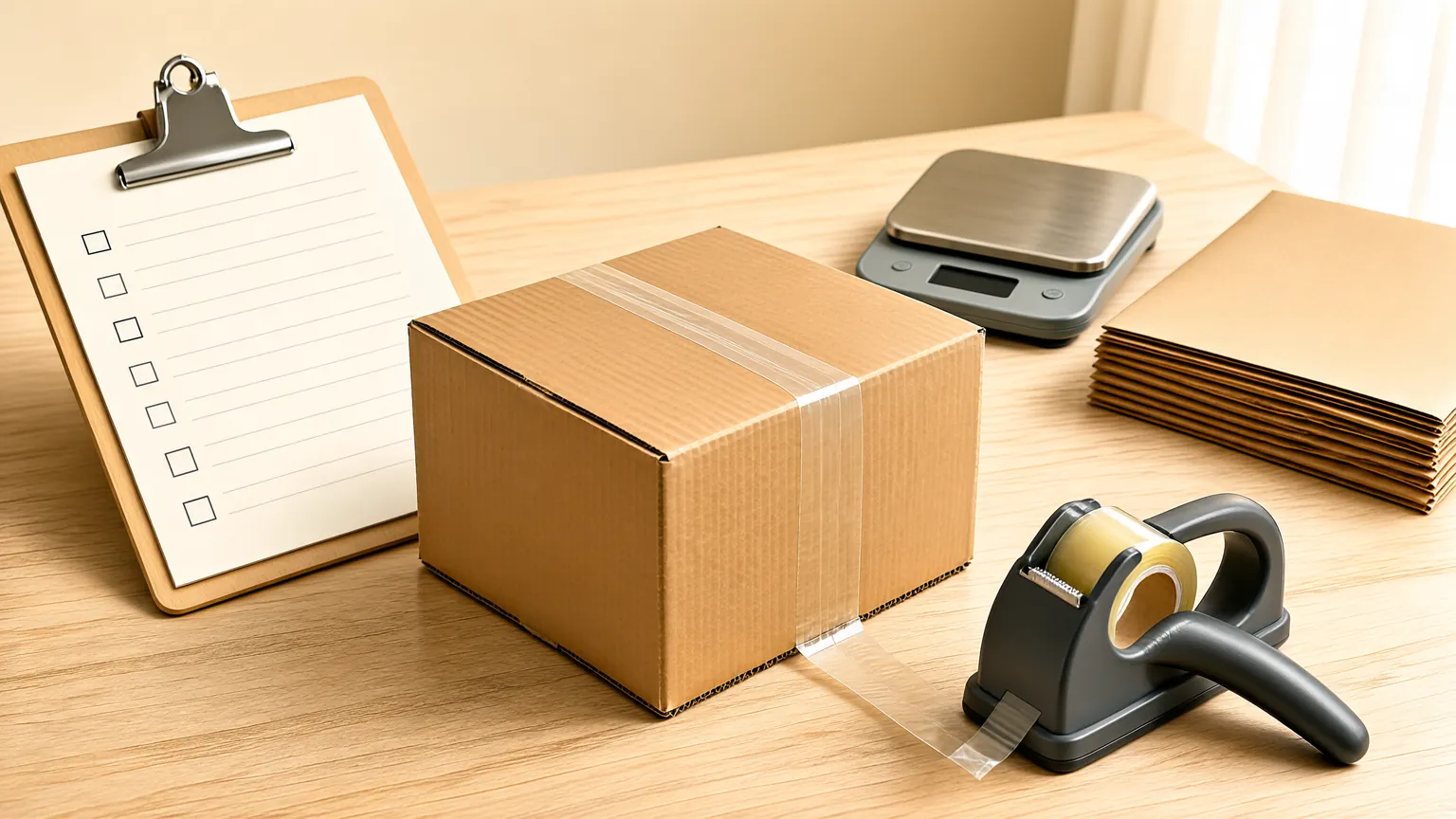
Whichever route you choose, a few things decide whether fulfillment goes smoothly or turns into a mess. Get these right and the method matters less.
Know the rules for your products. If you ship food, cosmetics, supplements, batteries or anything with a safety label, the rules apply to you, not just to your warehouse. In the US, the FDA publishes the requirements for food and drug products, and the CPSC covers many consumer goods. Check the FDA’s food safety guidance if your products fall under it. For anything else, ask the warehouse’s compliance team directly.
Prepare your product data first. Every provider needs weight and dimensions per SKU. Measure a packed box, not the bare item. Wrong data causes wrong postage, and the difference comes out of your margin.
Weigh and measure a second time before you send anything over. A kitchen scale and a tape measure cost less than one corrected invoice, and carriers bill by the dimensions they find, not the ones you filed.
Check stock levels weekly. Set a reorder point for each product — the level where you order more. If you wait until zero, you’ll pay for expedited shipping or cancel orders.
Your reorder point should cover the time your supplier takes to restock plus the time your warehouse takes to receive it. If your supplier quotes four weeks and receiving takes one, order when five weeks of stock remain. Selling twenty units a week, that’s a hundred units on the shelf.
Watch your first 20 orders closely. Open every packing slip. Check the address, the item, and the box size. Problems show up early and get expensive later.
Keep a running note of every error you find in those twenty. If the same mistake appears twice, fix it in your product data or your instructions before order twenty-one ships.
Handle returns with one clear rule. Decide now whether customers ship returns to you or to the warehouse. Write it on your returns page so nobody has to email you to find out.
If any of this touches licensing, import rules or product safety law, that’s not a do-it-yourself job. Talk to a customs broker or a compliance advisor before you ship.
Related guides
- Best Dropshipping Apps for Shopify
- Best Email Marketing for Shopify Stores
- Best SEO Apps for Shopify
Frequently asked questions
How much do Shopify fulfillment services cost?
Most charge per order plus storage. Storage runs per cubic foot per month, and pick-and-pack fees scale with your order volume. Amazon MCF sits at the higher end. These are ranges, not quotes — your exact rate depends on your product size, weight and monthly volume. Get a written quote from each provider and compare the total for your real order mix.
How long does it take to set up fulfillment for a Shopify store?
Plan on 1–2 weeks for Shopify Fulfillment Network, 2–4 weeks for a 3PL, and 3–7 days for Amazon MCF if your stock is already in Amazon’s warehouses. The biggest delay is usually shipping your own stock to the warehouse. Add 3–7 days for receiving once it arrives.
Can I use more than one fulfillment service at the same time?
Yes, and many stores do. You might keep fast-moving products in a 3PL near your main market and slower items at home. Shopify lets you assign different locations to different products. The risk is split stock — you can oversell if two systems don’t sync. Check your inventory levels in one place every week.
Is it safe to send my inventory to a fulfillment warehouse?
It’s normal practice, but check two things first. Ask what insurance the warehouse carries and whether it covers your stock value. Then read the contract’s liability section — most limit what they’ll pay if goods are damaged or lost. If your stock is worth a lot, ask your own insurer about coverage.
What happens if a fulfillment service ships the wrong item?
Contact the provider’s support immediately with the order number and a photo. Most will reship at their cost if the error is theirs. Then check your product data — wrong weights or barcodes cause most mis-ships. If it keeps happening, that’s a sign to look at another provider.
Why do my shipping costs go up after switching to a 3PL?
Usually it’s dimensional weight. Carriers charge by the space a box takes, not just its weight. If the warehouse uses bigger boxes than you did, you pay more. Ask them to use the smallest box that fits, and review your box sizes after the first month.
How many orders a month before I should stop self-fulfilling?
There’s no fixed number, but most sellers find self-fulfillment stops making sense somewhere between 20 and 50 orders a month. The real test is time: if packing orders eats more than a few hours a week, you’re paying yourself too little. Track your hours for one month and compare that to a 3PL quote.
Conclusion
Fulfillment isn’t glamorous, and no provider will care about your customers the way you do. But picking one that fits your volume and your region frees up the hours you actually need for marketing and product work. Start with the method that matches your situation today, measure your real costs for a month, and switch if the numbers don’t work.
